
Emmanuel Abord de Chatillon, Grenoble IAE Graduate School of Management and Annick Valette, Grenoble IAE Graduate School of Management
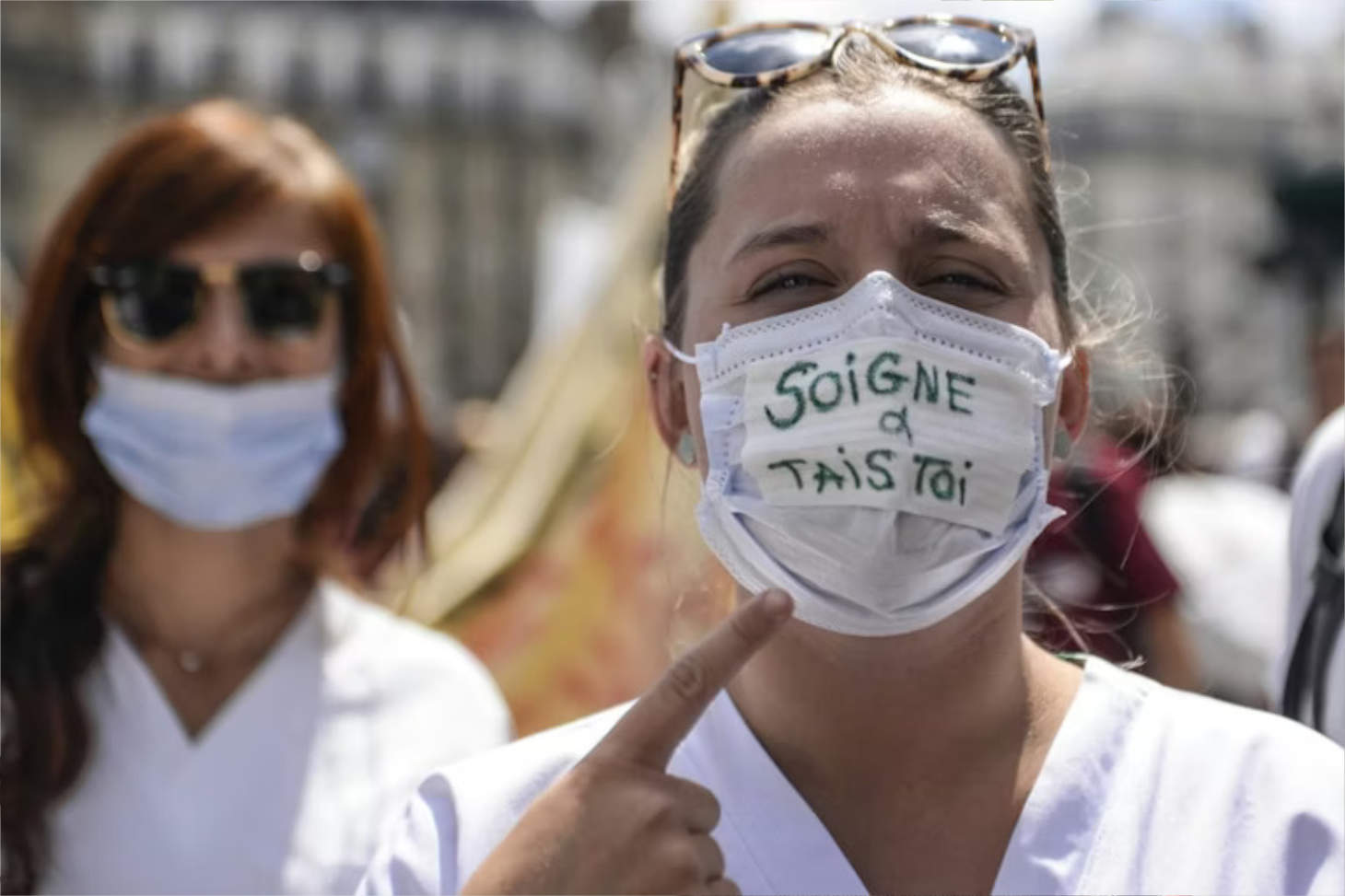
The response to the COVID-19 pandemic is currently coming up against a dramatic shortage of available hospital resources. Crisis situations require the ability to mobilize reserves of human, material, and financial resources. Yet these reserves have been depleted—primarily for accounting reasons—by the relentless pursuit of productivity gains.
The key question is whether these changes, which are reflected in the working conditions of healthcare workers, have more far-reaching consequences. Based on this question, we decided to examine the links between working conditions and healthcare workers’ willingness to get vaccinated against the flu.
Caregivers Experiencing Emotional Exhaustion
Vaccination—particularly among healthcare workers—is in fact considered by experts to be an effective measure for collectively combating the annual flu. However, the percentage of staff vaccinated against the flu stands at only 36% for nurses and 21% for nursing assistants. Overall, among healthcare workers, the vaccination rate stands at 45% in Europe and 25% in France. Meanwhile, the flu kills 130,000 people annually in Europe and 10,000 to 15,000 people in France.
It should be noted that, at present, doctors and healthcare workers employed at hospitals or nursing homes are not required to get the flu vaccine. Only vaccines against hepatitis B, diphtheria, tetanus, and polio are mandatory.
The explanations generally offered for this low vaccination rate stem from the perception that the vaccine is ineffective, its possible side effects, and the fact that the consequences of the flu are considered mild. And gradually, this low vaccination rate has become the norm.
In contrast, there are studies on the link between working conditions, time pressure, fragmented work schedules, the availability of equipment, recognition of efforts made, and compliance with preventive measures. What is the specific situation regarding the flu vaccine? Is there a link between this deterioration in working conditions and the likelihood of getting vaccinated?
Our survey of 794 healthcare workers establishes a close link between working conditions and vaccination. This study was initially based on the idea that poor working conditions lead to a sense of unease that can result in emotional detachment from others—a form of emotional exhaustion that leads to a refusal to make any additional effort requested by institutions on behalf of patients.
The aim was therefore both to assess the existing links between working conditions and the likelihood of vaccination, and to test the hypothesis that non-vaccination is the result of working conditions so harmful that they lead healthcare workers to distance themselves from their relationships with others—and thus from the very foundations of their profession.
To this end, 794 responses from healthcare workers surveyed online between February and August 2018 were analyzed. The average length of service was 9 years; 85% were women; 77% were nurses; and 23% were nursing assistants. Twenty-nine percent of healthcare workers had been vaccinated less than a year ago, and 39% had never been vaccinated. The study was approached using three sets of variables measuring the quality of the relationship with line managers, the feeling that the relationship with the hospital had been betrayed (also known as a breach of the psychological contract), and workload.
The results, obtained using linear regression—that is, a model that seeks to establish a linear relationship between a variable, known as the dependent variable, and one or more variables, known as independent variables—show that there is a strong statistical link between these three variables and vaccination.
In other words, working conditions influence the likelihood of getting vaccinated.
However, this connection does not involve a rejection of relationships with others. While statistically speaking, “altruistic burnout” does indeed exist, it is not what drives people to refuse vaccination: the link between working conditions and vaccination is direct.
Regain the freedom to act and take care of yourself
Once deterioration reaches a certain threshold—that is, when there is a perception that the obstacles to providing quality care have become too great—the feeling of being controlled becomes overwhelming. It drives healthcare workers to do whatever it takes to preserve their autonomy and their freedom to be and act as they see fit, even if it means refusing the vaccine, which is perceived as yet another mandate—one too many.
The survey thus reveals a link between the perceived difficulty of working conditions, anger toward the institution—associated with a sense of loss of freedom—and the decision not to get vaccinated. It is indeed the institution—the employer and the prescriber—perceived as the entity preventing work from proceeding as it should, that is the target of the decision not to get vaccinated. In fact, these results highlight the importance of the core activity of “providing care.”
We observed what appeared to be an anomaly in the 2016survey data on working conditions from the Directorate for Research, Studies, and Statistics (DARES). While investigating the factors contributing to psychological distress and well-being in hospitals, we observed that the physical demands traditionally associated with a form of arduous work were now more often associated with well-being.
Pushing a stretcher, assisting a patient with personal hygiene, turning them over, or helping them sit up in bed are not just physically demanding tasks; they are also opportunities to rebuild a bond with the patient that may have grown distant.
A New Perspective on the Hardship of Work
After the initial surprise, we had to come up with a hypothesis: what if physical activity—an integral part of providing care—were a way for caregivers to reconnect with the essence of their profession? The subsequent discussions with healthcare staff confirmed this hypothesis: in a world where nothing is certain, where the organization becomes “fluid” (meaning there are no longer even the minimum resources needed to do one’s job), pushing a stretcher or helping a patient sit up brings the caregiver back to the essence of their profession and their calling, despite the difficulties and pain they endure.
The day-to-day pressure to track down even the smallest resources deemed surplus affects the ability to both prevent and treat disease. What we demonstrate in this research is that, by targeting the very heart of the work, this hunt does not merely affect work activities. It exerts psychological pressure on individuals, leading them to engage in risky behaviors that are, in fact, far removed from the nature of their profession.
The COVID-19 crisis raises the question of hospital priorities. Investing in working conditions is not just about exchanging money for performance or comfort; it is also about ensuring the effectiveness of the hospital system by contributing to prevention. As we emerge from this crisis, the hospital system will need to strengthen the therapeutic contract that binds healthcare workers to their institutions. Rebuilding the system based on each individual’s role and its sustainability seems to be a promising path.
This article is based on research conducted by a multidisciplinary team comprising physicians (Alexandre Mignot and Olivier Épaulard), marketing specialists (Marie-Laure Gavard-Perret and Marie-Claire Wilhelm), and human resources professionals (Emmanuel Abord de Chatillon and Annick Valette).

Emmanuel Abord de Chatillon, Professor, Chair of Management and Occupational Health, CERAG, INP Grenoble IAE, Grenoble IAE Graduate School of Management and Annick Valette, Professor, Chair in Organizational Innovations in Health, CERAG, INP – Grenoble IAE, Grenoble IAE Graduate School of Management
This article is republished from The Conversation under a Creative Commons license. Read the original article.