

Elise Alfieri, University of Paris-Est Créteil Val de Marne (UPEC) and Yann Ferrat, Université Grenoble Alpes (UGA)
This year, the cryptocurrency market has continued to break records not only in terms of market capitalization but also in terms of its environmental and social impact. In fact, the price of the most iconic cryptocurrency, Bitcoin, once again reached its previous record high of $20,000 in December.
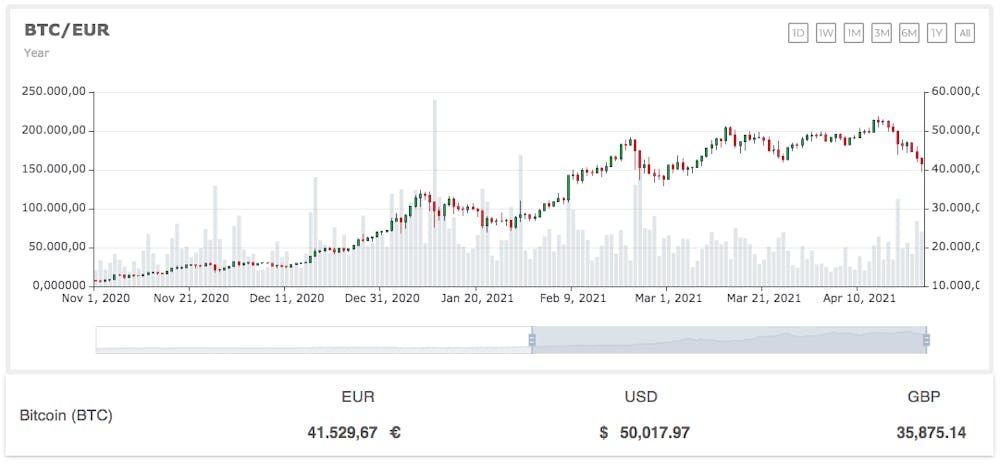
Since then, the price has skyrocketed to around $60,000, and at the same time, its energy consumption has reached alarming levels. It is now comparable to the energy consumption of countries such as the Netherlands. Does this obsession with financial performance come at the expense of societal externalities?
Currently, environmental, social, and governance (ESG) practices are under close scrutiny by the financial community. These concerns are now factored into investment decisions with the goal of financing a more sustainable world.
This enthusiasm is driven, on the one hand, by the appeal of responsible investing among investors and, on the other hand, by the increase in regulations regarding non-financial disclosures by companies. Ethical investors use this information to assess a company’s ESG performance and tend to exclude the most controversial companies. As for cryptocurrency investors, the majority still seem largely unconcerned about these issues.
Cryptocurrencies in Light of the Three Pillars of ESG
However, researchers have shown that the energy consumption of the Bitcoin network is enormous. Furthermore, the associated carbon emissions are estimated at 69 million metric tons—more than Portugal’s emissions alone. If these emissions are not drastically reduced, the goal of limiting global warming to 2 degrees will be unattainable.
Furthermore, the concentration of ownership poses serious governance issues. In fact, a small number of investors hold nearly half of all bitcoins in circulation. In addition, French and European authorities are facing difficulties in regulating the market. Since opportunistic behavior goes unpunished, research estimates that approximately 80 percent of cryptocurrency-related projects are fraudulent.
Nevertheless, cryptocurrencies have significant potential for cost reduction. The underlying technology, blockchain, enables transactions within a decentralized system without the need for a trusted third party. The third pillar of ESG—the social aspect—is underrepresented in current studies.
However, the social dimension is an integral part of how cryptocurrencies function. Indeed, this ecosystem includes various stakeholders, such as developers, miners, users, exchange platforms, public authorities, the media, and the environment.
In stakeholder theory as applied to the business context, maintaining strong relationships with these entities leads to greater competitiveness and, consequently, improved performance. This raises the question: Do cryptocurrencies with stronger social aspects outperform others?
Innovative Social Potential
In our latest research article, we focus on two key stakeholders at the heart of the social pillar: users and miners. Users are individuals who trade cryptocurrencies and can be considered shareholders. Miners, on the other hand, are individual users who enable the validation of transactions and can be considered employees of an “Uberized” company.
To measure the social performance of a cryptocurrency, three indicators can be used: miner compensation, financial inclusion, and transparency. Miners are compensated for their work. They receive a certain amount of cryptocurrency for each confirmed block. This compensation is variable and fluctuates based on the price of the cryptocurrency.
Financial inclusion relates to barriers to entry. These barriers are technological in nature—specifically, the computational power required for mining. The higher these barriers are, the fewer miners (primarily non-professionals) will participate in the system’s operation. Finally, transparency assesses access to cryptocurrency transaction histories. The most transparent cryptocurrencies ensure equitable access to market information for all users.
A Potential Responsible Investment
Using a sample of the top 20 cryptocurrencies from 2015 to 2020, we find that the most transparent ones are favored by the market. In fact, a portfolio of transparent cryptocurrencies yields an annual return twice that of a portfolio of less transparent cryptocurrencies. Thus, investors in the cryptocurrency market appear to value this aspect.
Our findings regarding compensation and financial inclusion show that these factors do not come at the expense of financial performance. It is true that these results could be biased by Bitcoin’s dominance. However, our findings remain unchanged when this bias is controlled for.
Based on these analyses, we suggest that making a socially responsible investment does not undermine profitability for cryptocurrency investors and may even prove to be a source of wealth. For developers, creating cryptocurrencies that promote social benefits—such as compensation, inclusion, and/or transparency—could enhance valuation during the Initial Coin Offering (ICO) process.

While the social aspect is a source of value, the other two dimensions of ESG—environment and governance—can also have an impact on the performance of cryptocurrencies. Extending this type of study to the other two pillars could prove relevant for investors and beneficial for promoting responsible investment.
In order to conduct a study on environmental impact, energy consumption and greenhouse gas emissions for a larger number of cryptocurrencies must be measured. The governance aspect, meanwhile, requires an in-depth qualitative analysis for each cryptocurrency.

Elise Alfieri, Associate Professor of Finance, IAE Gustave Eiffel, University of Paris-Est Créteil Val de Marne (UPEC) and Yann Ferrat, Ph.D. candidate, Université Grenoble Alpes (UGA)
This article is republished from The Conversation under a Creative Commons license. Read the original article.