
Laurence Carsana , Université Grenoble Alpes (UGA) and Marie-Laure Gavard-Perret , Grenoble IAE Graduate School of Management
GMF, SNCF, TotalEnergies… these are just a few of the 36 brands committed as official sponsors of the 2023 Rugby World Cup , which has been taking place in France since early September. These sponsors have chosen to partner with this high-profile event to ensure international visibility and associate their brand with the values of the sport.

Consequently, all these partners signed a contract with the event organizers granting them, in exchange for financial and/or material support, the right to promote the association using the name and symbol (including the logo) of the sponsored entity. Thus, it is common in advertisements , press releases, and poster campaigns for sponsors to feature the World Cup logo alongside the brand's logo at the end of the ad .
However, major international events also present opportunities for non-partner brands to capitalize on the excitement generated by these events. This practice is known as "ambush marketing" (or "ambush sponsorship" or pseudo-sponsorship). The Paris Court of Appeal defines this practice as:
"An advertising strategy implemented by a company to associate its commercial image with that of an event and thus benefit from the media impact of said event without paying the related fees and without having obtained prior authorization from the event organizer."
For example, in a case heard by the Paris Court in 2020, the association that organizes the Cannes Film Festival sued one of France's largest luxury brands for copyright and trademark infringement, as well as for unfair competition, citing ambush marketing practices. The brand was specifically accused of prominently featuring Instagram stories of its brand ambassadors on the red carpet. According to the organizers, these posts could lead people to believe that the brand was an official partner of the renowned film festival.
Ambush marketing in practice
However, it is entirely possible for non-partner brands to benefit from a major event without directly using the brand or intellectual property associated with it. Provided they demonstrate creativity and originality!
Several strategies are then possible:

In the first scenario, the non-official advertiser partners with the media outlet that provides the most extensive coverage of the event. For example, the home security system brand Homiris partners with TF1, the official broadcaster of the Rugby World Cup, but not of the event itself. This practice creates an interesting situation for Homiris, as its brand appears just before the matches resume, alongside the brands that are partners of the original event.
A second strategy for non-official advertisers is to occupy all available advertising space surrounding the event. For example, during the Rugby World Cup, the official broadcaster is TF1. It can be particularly advantageous for a brand wishing to gain visibility and establish a connection with the event to purchase as many advertising slots as possible during match broadcasts, and if possible, the first or last slots during commercial breaks. Similarly, the pseudo-sponsor can buy all available media space (such as billboard campaigns around stadiums).
[More than 85,000 readers rely on The Conversation’s newsletters to better understand the world’s major issues. Subscribe today]
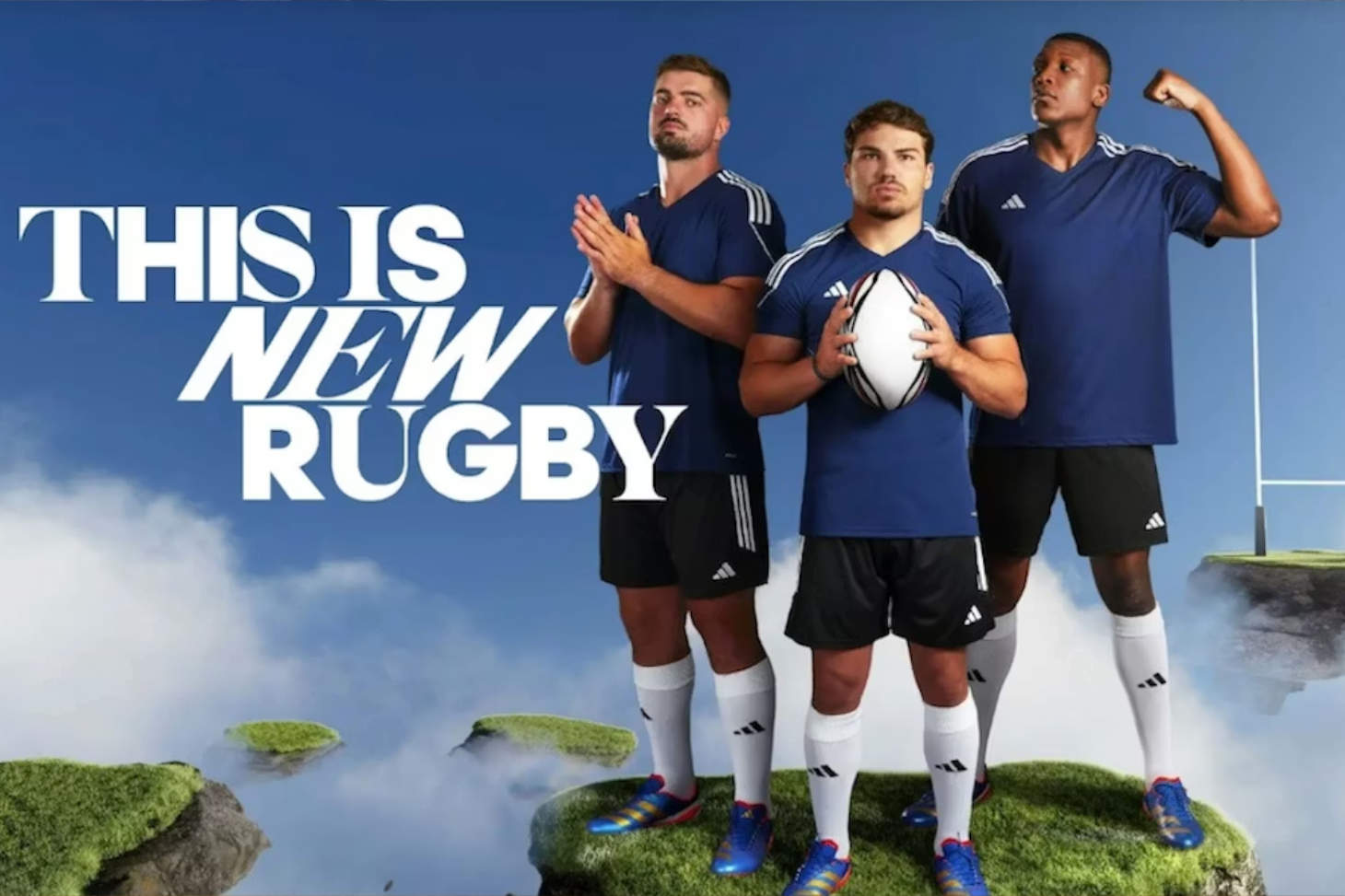
Thirdly, the non-statutory advertiser has the option of associating with a celebrity linked to the event: one can cite the example of Adidas which broadcasts an advertising campaign featuring three of its brand ambassadors, players from the French rugby team, while the official sponsor of the French rugby team during the World Cup is a competitor, Le Coq Sportif.
A fourth strategy relies on non-statutory advertisers adapting their communication to the circumstances, suggesting an association with the event. The Hippopotamus restaurant chain is a good example of this strategy. The restaurants are transformed, from their window displays to their menus, to celebrate the event. Simultaneously, five French and international rugby players are brand ambassadors on Instagram for a contest.
Finally, as a last strategy, non-statutory advertisers can exploit unprotected elements to their advantage: for example, a company is perfectly free to communicate using words, colors, images, or symbols related to the event in question to promote its activities. Thus, the Jägermeister brand explicitly announced that it would adopt the colors of France during the Rugby World Cup , in order to capitalize on the event.
Moreover, the Paris Court of Appeal, in its communication defining ambush marketing practices, regarding the Cannes festival, clearly stated that the use of words such as " 7th art" or " Cannes " in promotional communication is in itself perfectly legal.
A strategy that remains risky.
Companies that use this type of manipulation or circumvention of official sponsorships primarily aim to capitalize on the values and enthusiasm generated by events, hoping to transfer these elements to their brand. However, if these pseudo-sponsorship tactics are exposed, the public reaction is generally negative.
A study published in 2010 notably showed that the disclosure of this type of practice negatively influences the perceived integrity, emotional evaluation, and purchase intention of the unofficial partner brand. Furthermore, the more individuals are involved in the event, the more negatively these elements are perceived.
Therefore, be careful not to obtain a communication and image effect contrary to that hoped for!

Laurence Carsana , Senior Lecturer (HDR) in Marketing, Grenoble IAE-INP, Cerag Laboratory, Université Grenoble Alpes (UGA) and Marie-Laure Gavard-Perret , Professor of Management, Grenoble IAE, CERAG Laboratory, specialist in social marketing and persuasive and preventive communication, Grenoble IAE Graduate School of Management
This article is republished from The Conversation under a Creative Commons license. Read the original article.