
Emmanuel Abord de Chatillon, Grenoble IAE Graduate School of Management and Damien Richard, INSEEC Grande École
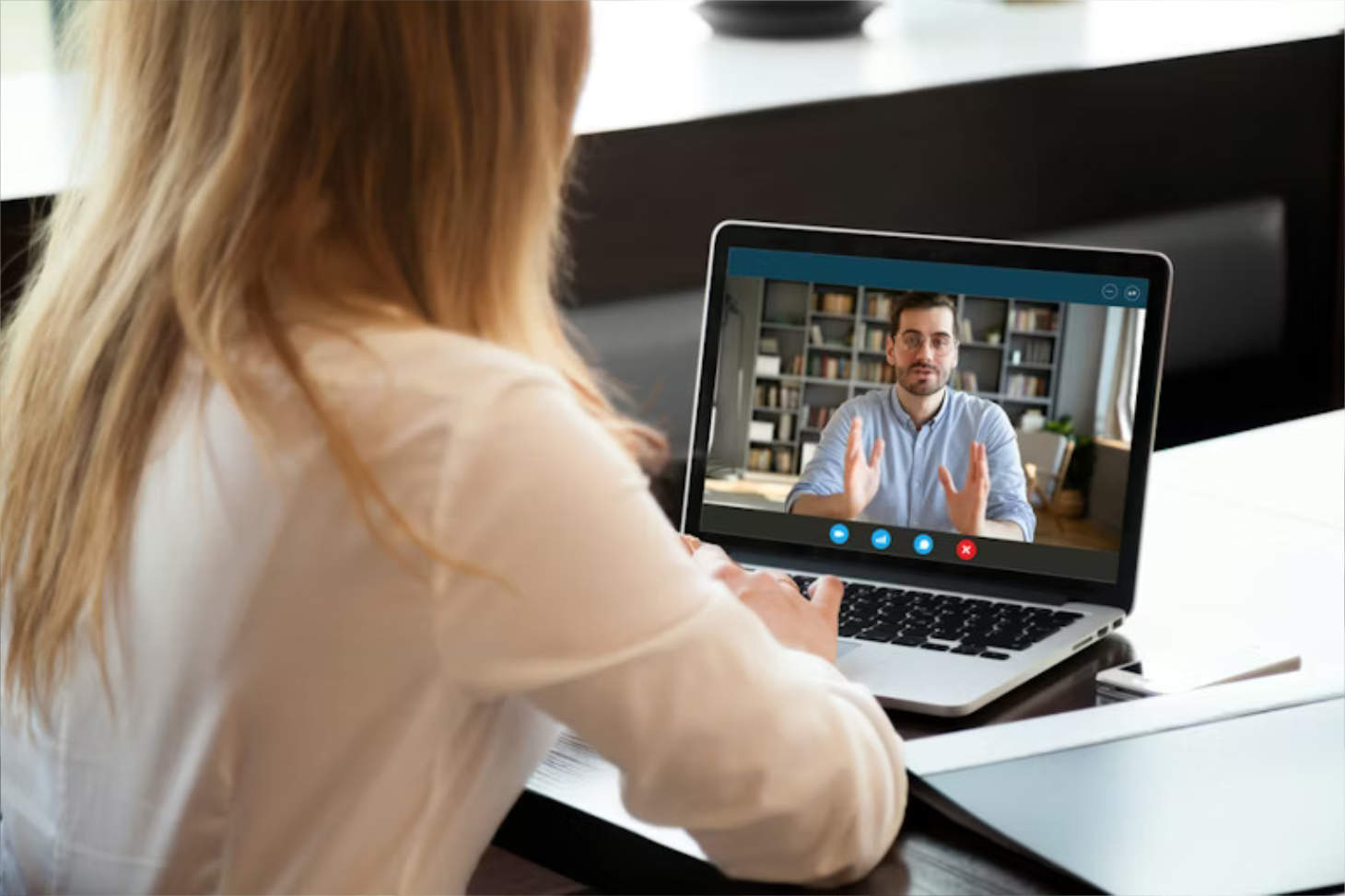
The period of mandatory remote work during the lockdown also raised broad questions about how to organize remote management. However, during this period, employees’ expectations and perceptions of their managers did not change. In other words, there do not appear to be any major differences between the period before the lockdown and the lockdown period itself.
This is one of the key findings of our survey, conducted in April and May among approximately 5,000 respondents, who shared their wishes with us: above all, a regular relationship based on trust, follow-up, and communication—as if this period of forced separation had not fundamentally changed the nature of the manager-employee relationship.
A Relationship of Trust
On a lighter note, we asked respondents which animal they associated with their supervisor, which allowed us to link each animal to its impact on working conditions and the resulting consequences. The dog and the fox were the most frequently cited. This typology generally corresponds to good managers, although the dog is slightly less stressful than its counterpart.
The best animal manager is the lion. Not only is it an exemplary leader—participative and attentive—but it also fosters team spirit and keeps boredom at bay. At the other end of the spectrum are the animals whose management styles make people sick: the snake, which is stressful and allows for neither autonomy, recognition, nor well-being… and the shark, which is authoritarian, distant, individualistic, and stressful.
Respondents mentioned these latter categories far less frequently than dogs and foxes, illustrating that a relationship of trust has generally been established today between managers and their teams. The responses to this question demonstrate once again that what employees really want, above all else, is an approachable manager—a leader who maintains a connection with them by being responsive and available to their requests.
The responses thus appear to be consistent with what was observed under “normal” circumstances, since the main criticism generally leveled at management is, above all, its absence.
Management Stripped Down to the Bare Essentials
As Mathieu Detchessahar, a professor at the University of Nantes, points out, “managers are absent from the workplace,” absorbed as they are by numerous meetings, as well as by the need to contribute to overarching projects, prepare reports, oversee administrative systems, and compete for positions while also attending to the political aspects of their work.
In fact, what employees are saying here, quite simply, is that they need a regular and trusting relationship… Which is, after all, only a small part of a manager’s job. Generally speaking, what is being expressed here is a desire for a form of “management stripped down to the bare essentials”—a manager who makes himself available to meet the needs of his employees, acting as a servant leader or liberator.
We could thus summarize remote work management by saying that we’ve shifted from a style of management characterized by distance but proximity—before the lockdown—to a style of management characterized by proximity despite distance during the lockdown. It’s as if we’d moved from relational distance before to physical distance afterward.
Except that this transition requires profound cultural changes in the way we think about management. Remote work effectively causes managers to lose some of their formal control, since they no longer have physical or visual oversight of their employees. They are therefore compelled to re-engage with the workplace in a more horizontal relationship and to get closer to the front lines if they do not want to lose all contact with their employees’ work.
Although this may seem frustrating to some managers, remote work brings the managerial relationship back to its essential purpose and original function, which is quite simply the management of work in its subjective, objective, and collective dimensions.
Back to the Abnormal
This lesson about the need for closeness is all the more essential given that, clearly, this period of lockdown served as a true, large-scale test of remote work. Many people were introduced to it, and others—including employees and executives alike—realized that most work could be done remotely, sometimes yielding benefits in terms of both employee comfort and company productivity.
Despite the relative lack of preparation for the situation (one in two people in our sample had never worked remotely) and the difficult conditions of the lockdown, this period has not led to a rejection of this form of work. On the contrary, overall, among the people we surveyed, many would like to work remotely more often in the future.
All in all, it seems that the lockdown has made working from home the norm and convinced many employees of its benefits. On average, more than two-thirds of respondents would like to work from home more often in the future. This period of mandatory lockdown provided an opportunity to experience the benefits of working from home.
It stands to reason, then, that if employees have come to appreciate remote work so much—even under conditions that were far from ideal—it will be difficult for them to give it up entirely in the future. Management will therefore need to take this factor into account going forward and support this transition by paying even closer attention to the need for “remote closeness,” so that this shift can take place under the best possible conditions.
This text was developed in collaboration with Clara Laborie, a master’s student in Strategic Human Resources Management at Grenoble IAE.

Emmanuel Abord de Chatillon, Professor, Chair of Management and Occupational Health, CERAG, INP Grenoble IAE, Grenoble IAE Graduate School of Management and Damien Richard, Lecturer and Researcher in Management, Chair in Management and Occupational Health, INSEEC Grande École
This article is republished from The Conversation under a Creative Commons license. Read the original article.