
Annick Valette, Grenoble IAE Graduate School of Management and Delphine Wannenmacher, Université de Lorraine
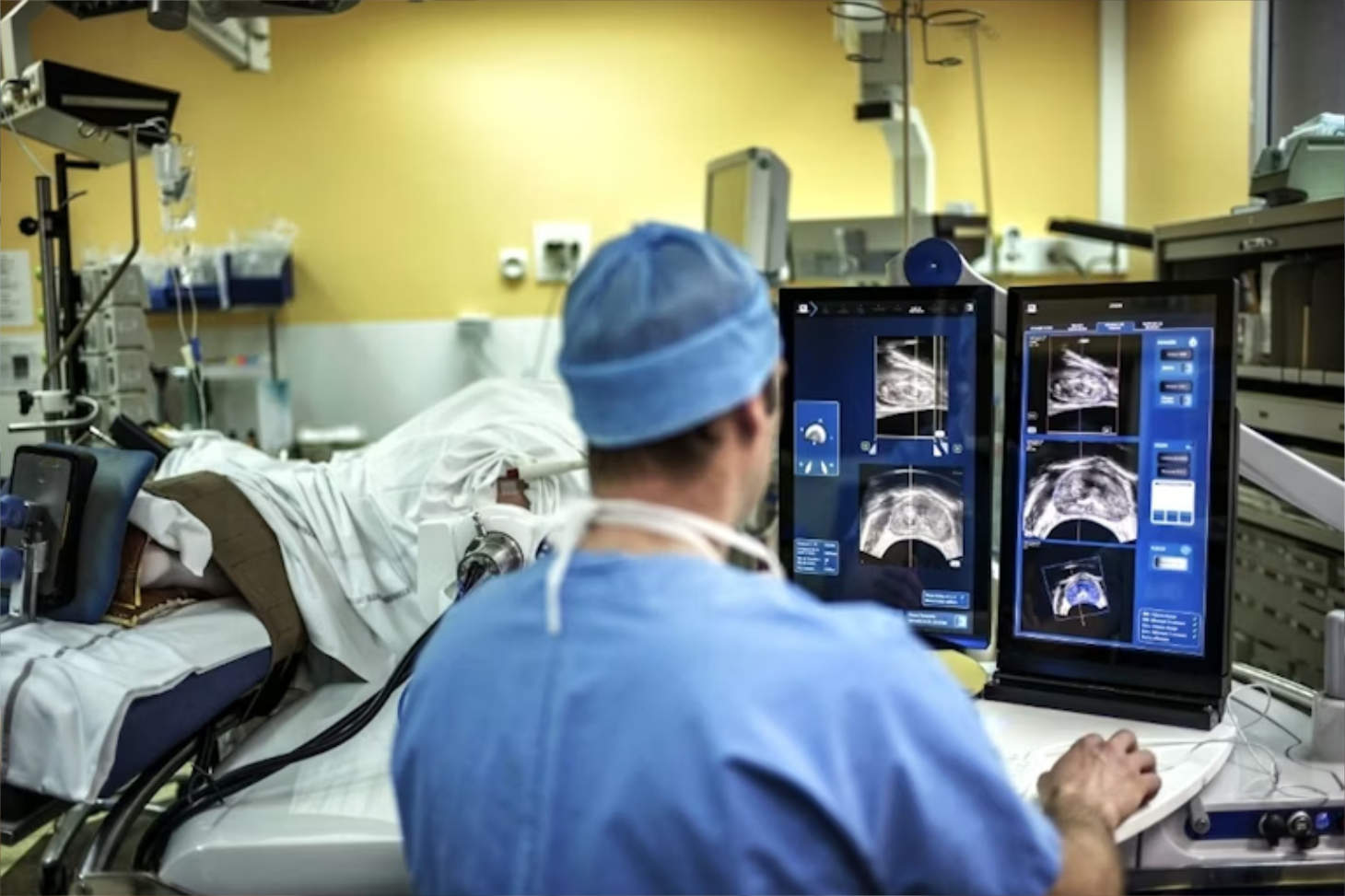
In an operating theatre at the Nancy University Hospital, a surgeon, with his head buried in a console, observes in three dimensions the body of a female patient who has come in for a kidney removal. Using joysticks and foot pedals, he controls a robot with four arms, at the ends of which instruments and a micro-camera enter the patient's body through a few small incisions.
This technological arsenal, now present in all university hospitals in France, is emblematic of the growing place of high technologies in operating theatres since the early 2000s. The surgeon's movements are amplified by the robot's arms, which rotate 360 degrees and are secure since there is no risk of shaking. Painkiller prescriptions and patient recovery times are reduced because the procedure is less traumatic.
Meanwhile, at the Grenoble University Hospital, an anaesthetist has seated herself at the head of a patient who has come in for a breast removal. She speaks to her at length and softly about a walk in the cold snow, warm sunshine, and crunching footsteps, monitoring her physiological reactions while injecting her with medication for mild sedation and local-only anaesthesia. Through these words, she seeks to put the patient into an altered state of consciousness. Thus, the interventions performed on the body, which are a priori painful and anxiety-provoking, are dissociated from their induced psychological experience to become pleasant.
Hypnosedation practiced here has also seen significant development since the early 2000s. The injection of anesthetic drugs, wake-up time, and recovery duration are reduced. Patient anxiety is managed; the experience of the procedure is lived more positively, offering anesthetists a lever to rehumanize their care practices.
Our research conducted in two university hospitals (one of which is forthcoming in the journal M@n@gement), representative of other institutions, shows that while the success of these techniques, high or low, relies on the skills of pivotal individuals, it remains conditioned on the quality of collective work. This collective work must be supported and provided with tools, even as it is continually threatened.
Altered relationships
Robot-assisted surgery and hypnosis obviously require specific skills from those who implement them. Surgeons operating with the help of a robot must train in handling the joysticks and foot pedals, even if the gestures remain relatively intuitive. To this end, training programs partly involving simulators have emerged, such as the interuniversity diploma (DIU) in robotic surgery offered by the Nancy Virtual Hospital.
Hypnotherapists, whether physicians or nurse anesthetists, also undergo several weeks of training to master the language of hypnosis and adapt it to each patient's situation. Their words must align with their actions as they administer medication, inject, and monitor vital signs, requiring them to be completely at ease with the core competencies of the profession.
These individual, technical skills necessary for good practice are not sufficient. The surgeon and their robot, the hypnotherapist and their patient, do not operate alone but are surrounded by other surgeons and anesthetists, operating room nurses, and orderlies.
The work of these participants changes under the influence of new techniques. This is true for the work of the surgeon under hypnosis. It is the anesthetist, even if they are a nurse, who sets the pace and enforces the rules of good practice.
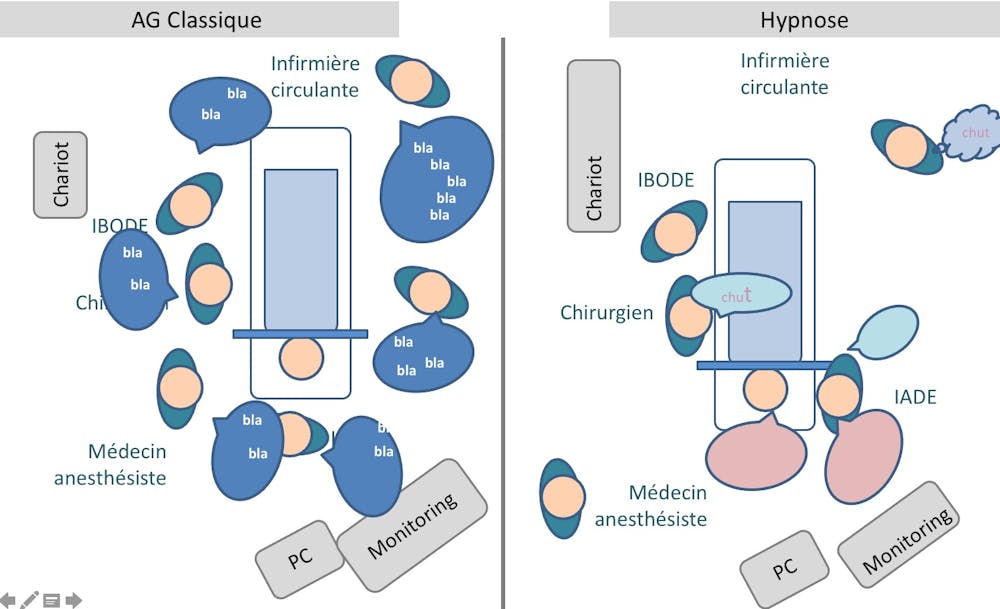
For example, we witnessed a nurse correcting a surgeon who had just said, "Careful, it's going to be cold," risking pulling the female patient out of her bubble. The latter easily acknowledged his mistake:
"I really need to put myself at the service of the work undertaken by the nurse anesthetist. I become an executor. It is very tiring."
All operating room participants, from the orderly to the surgeon, must learn to work while paying attention to the effects of their actions, movements, and words on the patient's hypnotic state of consciousness.
For robot-assisted surgery, the relationship between the surgeon and the other members of the operating team is also altered. The surgeon, at the controls both literally and figuratively, will set the pace of the procedure, from patient preparation to the organ removal phase, including the various steps required to reach the organ despite multiple tissues and fat. The surgeon's instructions sound like orders: "suction," "send down a third sponge."
The scrub nurse accepts a more restricted role than in open surgery. She merely passes equipment or instruments to the assistant, who himself becomes a simple executor in response to the surgeon's instructions. The circulating nurse is rarely called upon during the procedure, which can last up to three hours.
The abandonment of old routines, the shifting or narrowing of roles, and the reversal of dependency relationships are only acceptable to these professionals if done in the name of collective work, in service of the patient's benefit. It then takes on its full meaning.
Changes in communication
Team coordination relies largely on the content of the various jobs, which allows everyone to know what they must do to fulfill their own role while also complementing the roles of others. But this is not enough. Interactions are necessary throughout the operation, relying on precise communication, albeit profoundly modified by the techniques.
The success of hypnosis requires, for example, that the words exchanged within the team do not interfere with those of the hypnotherapist. We witnessed a young girl suddenly sitting up on the operating table, "awakened" by a surgeon explaining that she presented a physiological peculiarity making the procedure interesting. It is therefore important that the participants agree on alternative means of communication to natural speech, such as eye contact, coded words, etc.
The stakes of a renewed collective communication are even more pronounced in the case of the robot. The robot organizes a "sidelining" of each participant. The surgeon, with their head inside the console, views the procedure in 3D. They give instructions to residents and operating room nurses located more than a meter away, who follow the procedure on a 2D screen and do not always hear them. As for the anesthetists, they see neither the screen nor the rest of the team because they are behind a protective drape which, as with hypnosis, is experienced as a barrier.
Since non-verbal communication is not possible between the surgeon and the rest of the team, secured communication must be prioritized. After each instruction, the nurse or assistant must state out loud what they are doing so that the surgeon is assured of having been heard and properly understood.
This requires changes in practices, failing which tensions arise. For instance, an exasperated surgeon who had asked for an additional sponge and, receiving no verbal feedback and not seeing it arrive inside the patient's body, popped his head out of the console and shouted, "A third sponge, please!" It was indeed on its way, but neither the nurse nor the assistant had thought to verbalize it. Secured communication is a new competency of collective work.
Collective work is not a given but a process that requires step-by-step learning. It must be supported because it does not happen automatically. It is facilitated by debriefing sessions, which make it possible, for example, to realize that the operating room nurse's noisy stool needs to be changed because it impairs communication, or to consider making a hole in the sterile drape to allow visual exchange between the anesthetist and the surgeon in hypnosis situations.
It is also facilitated when it is the subject of a shared representation. In the case of the robot, viewing filmed operation sequences is a help in becoming aware of the spatial obstacles created by technology, which collective work must overcome. In the case of hypnosis, the repeated use of the "bubble" metaphor offers a shared image of what collective work must build and protect around the patient.
The efficiency of new techniques is therefore not dependent solely on the skills of those who implement them, but also on the quality of the work of all participants in the operating rooms. Technical innovation, high or low, must be combined with the development of non-technical skills that help the collective visualize its work, interdependencies, and obstacles. It must also be accompanied by learning mechanisms that require time, space, and continuity—elements severely challenged by turnover, human resource constraints, and the optimization of operating room occupancy rates.

Annick Valette, Professor, Chair of Organizational Innovations in Health, CERAG, INP - Grenoble IAE, Grenoble IAE Graduate School of Management and Delphine Wannenmacher, Associate Professor in Management Sciences, Université de Lorraine
This article is republished from The Conversation under a Creative Commons license. Read the original article.