
Stéphanie Havet-Laurent , INSEEC Grande École ; Jean-Yves Juban , Université Grenoble Alpes (UGA) and Marie Cousineau , Université de Rouen Normandie
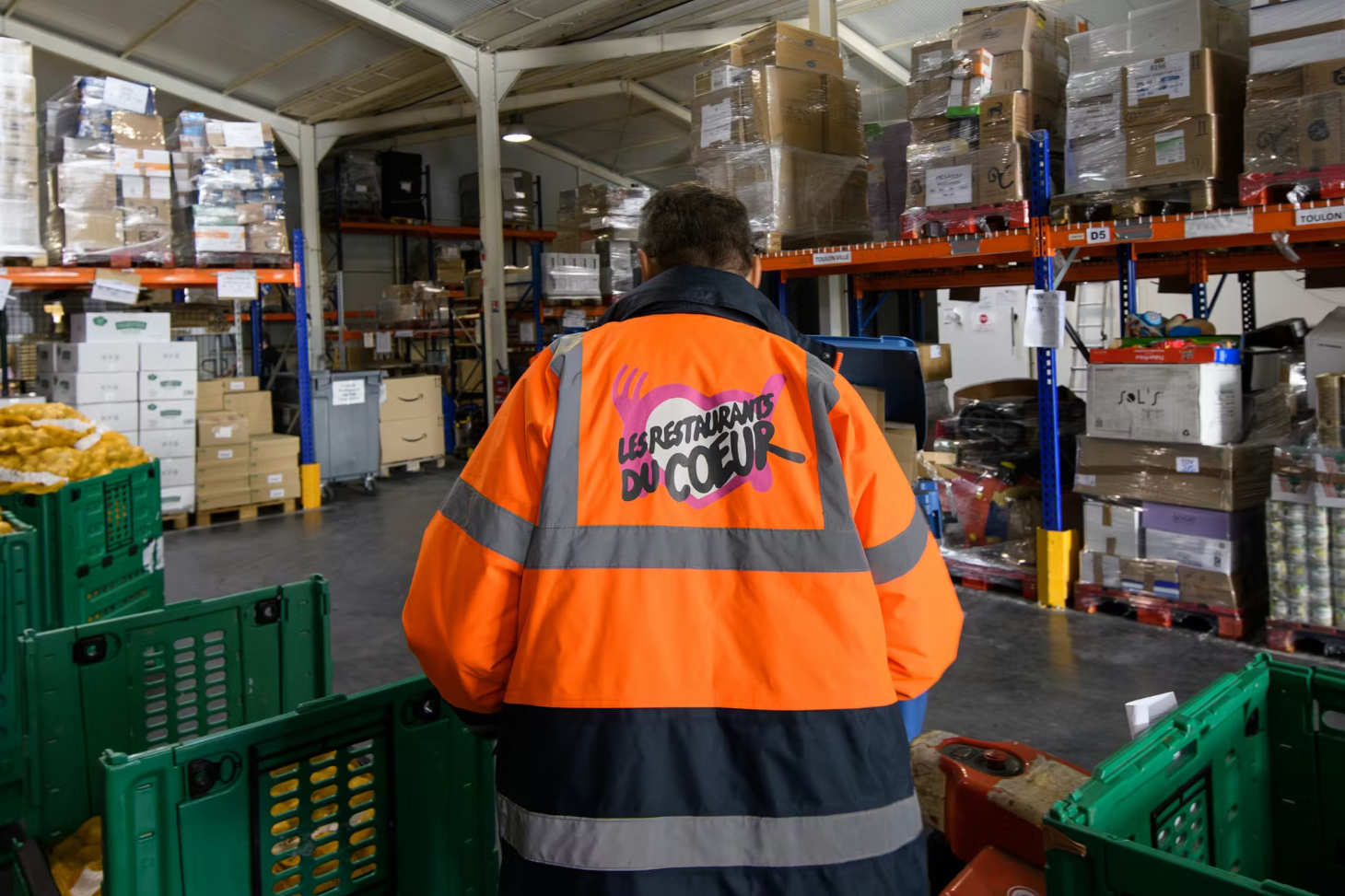
Research conducted at Restos du Cœur examines the balance between professionalization and activism, effective management practices and selflessness. How can paid staff and volunteers coexist? Founding values and economic sustainability?
Summer is coming with its sunshine, festivals, the Tour de France, and… its volunteers. In 2024, France had 1.5 million active non-profit organizations and 12.5 million volunteers . These volunteers play a fundamental role in the functioning of non-profit organizations; they represent 587,000 full-time equivalent jobs.
Associations are seen as an alternative to traditional businesses, offering human resource management (HRM) approaches that are closer to their employees. However, associations are not immune to difficulties . As analyzed in the book *Human Resource Management in Social and Solidarity Economy Organizations *, the non-profit sector faces tensions. How can the need for professionalization be reconciled with activist principles? How can paid work and volunteering be balanced?
Activist and professional
We conducted research with the Restos du Cœur association. This association aims "to provide voluntary assistance to people in need throughout France, particularly in the area of food, through the distribution of food, by undertaking any action that contributes to reintegrating people into social and economic life, and more generally, through any action against poverty in all its forms." The association, which distributed 163 million meals during the 2023-2024 campaign, has nearly 700 employees and more than 75,000 regular volunteers.
Initially driven by a charitable impulse, the association faces a tension between two approaches. One, activist, is based on selflessness. The other, professional, focuses on operating as efficiently as possible.
This tension is reflected in the relationships between employees and volunteers in four forms:
- Between altruism and sound management: the volunteers uphold the association's ideals while being "aware of the urgency of the beneficiaries' situation." The employees, for their part, ensure the association's smooth operation and are mindful that they have "a contract and that it is necessary to demonstrate technical expertise."
- Being close to those in need, while also meeting the needs of a large number of beneficiaries, is a challenge. Paid staff and volunteers often disagree on this point. "The help provided by volunteers is more immediate and takes into account the human dimension of the person being helped," testifies one volunteer. For paid staff, the work is done and conceived more in the long term.
- Disagreements exist regarding hierarchy and the functioning of operational structures. For volunteers, "there are only horizontal relationships. We work based on skills." Whereas for paid staff, "there needs to be a vertical structure and a real institutional framework."
- Tensions also arise from management. Volunteers have neither employment contracts nor remuneration. Managing them like employees, without taking their expectations into account, is risky: they can leave the association at any time and join another.
So, how do we maintain engagement?
Contradictions among the volunteers
One solution to ease these tensions would be to use management techniques. Research conducted by Marie Cousineau and Sébastien Damart examines these individuals' perceptions of human resource management (HRM).
Opinions are divided. Some consider it an aid to development:
"A group of volunteers, with its specific characteristics, can be managed, but it's managed like a team of employees. You have the right to have expectations."
For these volunteers, HR practices "are very useful for people joining the association." They allow them to "establish a framework, which can remain flexible so that everyone understands the roles of all members."
Others, on the contrary, believe that it is an obstacle to freedom of expression and the expression of one's values.
"I volunteer because I want to, not because I'm forced to."
This volunteer believes it would be inappropriate to select volunteers upon entry or to exclude people who do not have the profile required for a specific mission.
Four volunteer profiles
The research results show the existence of four volunteer profiles.
- There are the "incompatibles", who project an antinomic link between management tools and the associative project.
- We also find the "statutory pragmatists", who refer to the status of the volunteer (law 1901) to reject management tools .
- The "societal democrats," for their part, believe that the tools serve the values of associations; they see the adoption of managerial techniques as a method to ensure the success of the project.
- The final profile is that of the "professionals," who prioritize tools over values. In this context, the staff managing the association's volunteers must maintain contact with them to help them better understand that they are not simply carrying out tasks. As one staff member stated:
"The association must be based on shared values and objectives, strong trust, and genuine dialogue."
Associations need to be aware of these tensions in order to be able to seek a balance between the founding values of their social innovation project and managerial practices, which are essential for their sustainability.
In this sea of tensions between professionalization, activism, and differing perceptions, finding a balance between founding values and managerial practices is crucial. It proves to be a compass for navigating these pressures, in order to ensure the sustainability of associations.

Stéphanie Havet-Laurent , Lecturer and Researcher in Management, INSEEC Grande École ; Jean-Yves Juban , Professor of Management Science, Université Grenoble Alpes (UGA) ; and Marie Cousineau , Senior Lecturer in Management Science, Université de Rouen Normandie
This article is republished from The Conversation under a Creative Commons license. Read the original article.