
- Share
- Partager sur Facebook
- Partager sur LinkedIn
Defense
28, November 2024
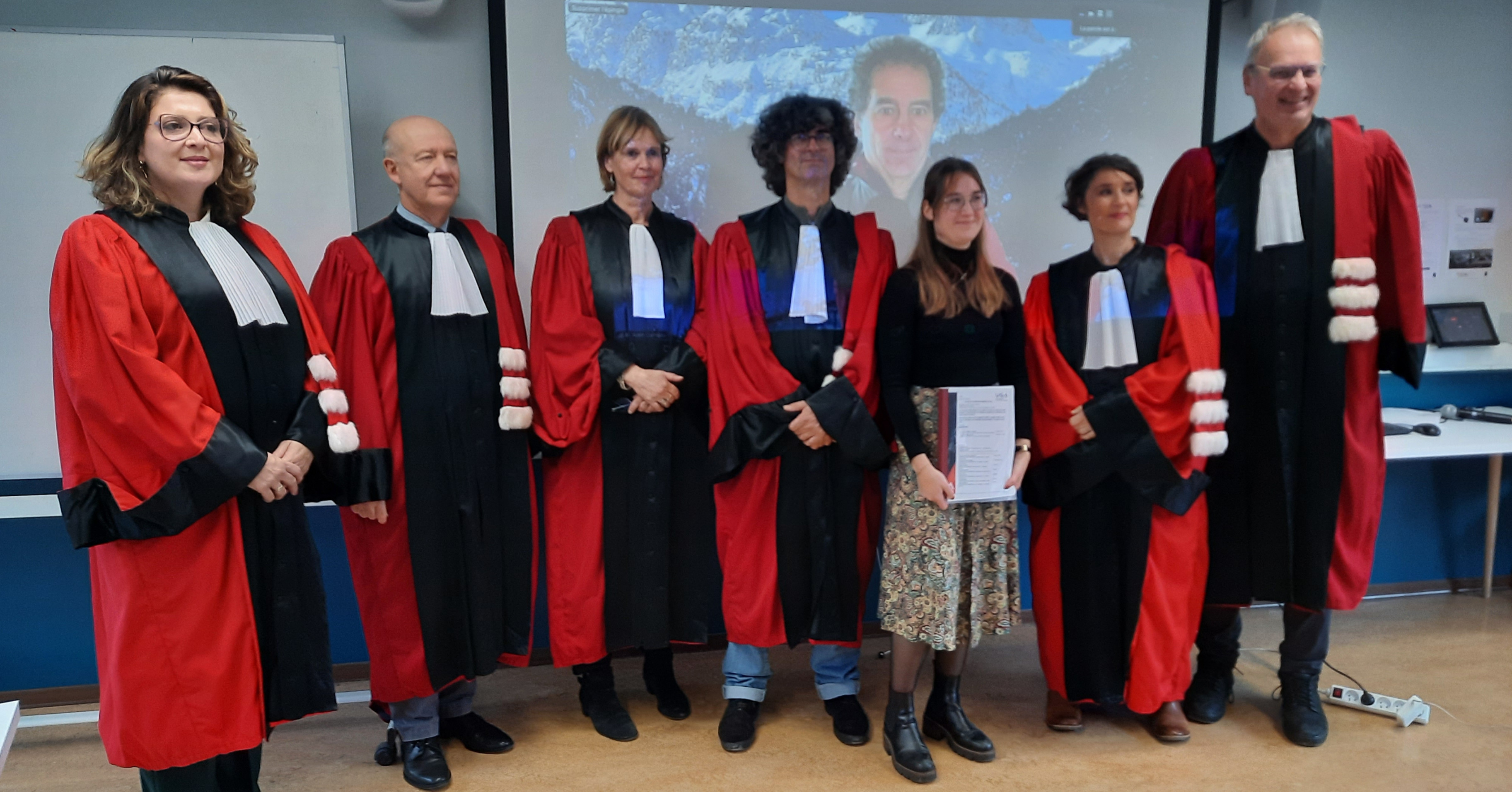
New Remote Workers and Occupational Health: A Public Health Issue? Issues Related to Workplace Distress and the Prevention of Psychosocial Risks.
Composition of the Jury
| Emmanuel ABORD DE CHATILLON | Grenoble IAE-INP - Université Grenoble Alpes | Thesis Advisor |
| Caroline RUILLER | IGR-IAE Rennes - University of Rennes | Rapporteur |
| Jean-Pierre NEVEU | University of Pau and the Adour Region (UPPA) | Rapporteur |
| Annick VALETTE | Grenoble IAE-INP - Université Grenoble Alpes | Examiner |
| Olivier ROQUES | IAE Aix - Aix-Marseille University | Examiner |
| Alain GARRIGOU | University Institute of Technology of Bordeaux - University of Bordeaux | Examiner |
| Christelle MARTIN-LACROUX | IUT2 Grenoble - Université Grenoble Alpes | Co-advisor for a doctoral thesis |
Abstract
This thesis examines the effects of the new era of remote work on employee occupational health during and after the COVID-19 pandemic. The pandemic disrupted work practices, imposing remote work on a population largely unaccustomed to this arrangement. While this unprecedented situation brought numerous advantages, such as greater autonomy and flexibility, it also exacerbated problems like isolation, work-life imbalance, and the proliferation of digital tools. These challenges underscore the importance of rethinking management strategies, both for remote workers and those remaining on-site.
Our research addresses these issues through a multidisciplinary and complex approach to occupational health. It examines both the factors contributing to stress related to remote work and the resources available to employees to mitigate these risks, improve well-being, and support performance, while also offering insights for emerging hybrid organizations. We focus our study on two main tensions: boredom at work in a remote work context and managers' experiences with hybrid work arrangements, navigating role conflicts and the need to adapt practices.
Our methodological approach relies on a diverse methodology to better understand the complex dynamics of teleworking and its effects on the health of new teleworkers, incorporating a systematic literature review, quantitative analyses, and a qualitative study. Through our findings, we argue that the new reality of teleworking has a clear influence on the occupational health of employees, regardless of their status. However, rather than simply being an influencing variable, teleworking acts as a revealing context that exacerbates pre-existing organizational tensions related to occupational health, highlighting the professional resources and best practices needed to address them. The theoretical contributions of this thesis demonstrate that boredom in the context of teleworking raises questions about the limitations of organizations in reconciling meaningful work, engagement, and employee health, underscoring the need for practices that promote autonomy and skills development to better prevent it.
Furthermore, this thesis provides an in-depth understanding of the psychosocial risks associated with managing hybrid work, notably revealing the additive and multiplicative effects of teleworking on pre-existing managerial role tensions. Despite differences in qualifications and occupations among the studied populations, the results reveal common challenges related to teleworking. However, teleworking, far from being a work arrangement entirely "like any other," requires continuous adjustments to be fully effective, taking into account its specific characteristics and remaining inextricably linked to the challenges associated with on-site work. The practical implications show that although teleworking is now normalized, managers need to better adapt their practices in hybrid mode to prevent boredom, maintain team cohesion, and ensure effective remote task management. Fostering team dynamics, coordinating projects, and preserving engagement thus become central challenges in a context of reduced direct interaction.
Date
9h
Location
CERAG - Ground Floor Room
150 Rue de la Chimie
- Share
- Partager sur Facebook
- Partager sur LinkedIn