
- Share
- Partager sur Facebook
- Partager sur LinkedIn
Conference
October 16, 2019, through October 18, 2019
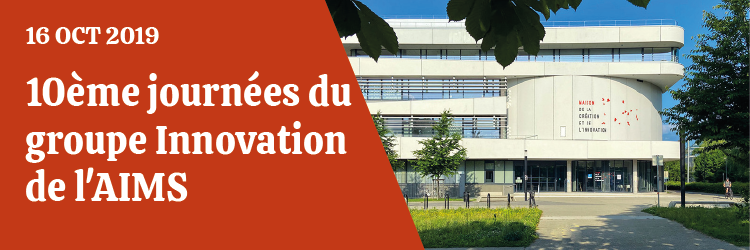
From creativity to innovation: paradoxes, theoretical issues, pedagogy and managerial challenges - October 17 and 18
Research in management science indicates that creativity and innovation are positively linked (Sarooghi, Libaers, and Burkemper, 2015). However, this research also reveals a gap in the understanding of this link, particularly regarding the role of creativity in innovation and creative processes (Cohendet, Parmentier, and Simon, 2017). Creativity has thus often been confined to the early stages of innovation processes and is considered a "black box" within the innovation process (Birkinshaw, Bouquet, and Barsoux, 2011). According to the interactionist approach of Woodman et al. (1993), while it is commonly accepted that creativity stems from individual capabilities, it also arises from the interactions between the individual and the organization. Therefore, the challenge in understanding creativity at the organizational level lies in considering the individual, group, and organizational levels simultaneously, and in clearly distinguishing it from innovation. The link between creativity and innovation must therefore be understood at these multiple levels and explore the effects of individual creativity, team creativity, and organizational creativity on innovation. Similarly, this link is also influenced by organizational design through organizational capabilities (Parmentier, Szostak, and Rüling, 2017), forms of ambidexterity (Revilla and Rodríguez-Prado, 2018), creative climates (Dul and Ceylan, 2014), position in networks (Lora, Vallet-Bellmunt, and Molina-Morales, 2017), and open innovation processes, and is dependent on the type of industry and the type of company (Giannopoulou, Gryszkiewicz, and Barlatier, 2014; Sarooghi et al., 2018). Digital technologies have a significant impact on creative processes (Sapsed and Tschang, 2014) and foster industry convergence. The link between creativity and innovation also appears to be reshaped by digital technologies. Given this complexity, the question arises of how to teach creativity and innovation, and how to use collaborative creativity practices to revitalize management education. Understanding the learning processes involved in creativity and innovation is therefore a crucial aspect of student training in our disciplines.
Beset by tensions, paradoxes and dilemmas, at the level of the individual, the entrepreneur, the organization and the territories, this relationship between creativity and innovation needs clarification (Baer, 2012), and it is on this theme that the Innovation Working Group proposes you contribute for these tenth days of meetings and debates.
Submission deadline: May 31, 2019
A long summary of a maximum of 2500 words in French or English.
Summaries and final versions should be sent by email to the following address: gtinnovation univ-grenoble-alpes.fr (subject: Dep%C3%B4t%20communication) (gtinnovation[at]univ-grenoble-alpes[dot]fr)
Pedagogy of Creativity at University - October 16
Creativity challenges and enriches the categories of university pedagogy: knowledge, skills, learning spaces, and approaches. This half-day session will provide an opportunity to reflect on creativity in higher education from various perspectives and disciplines.
The program includes a conference and experiential workshops to explore creativity in all its forms.
steering Committee
Cecile Ayerbe (GREDEG-University of Nice Sophia Antipolis) ayerbeunice.fr (ayerbe[at]unice[dot]fr) ; Valérie Chanal (CERAG- Université Grenoble Alpes ) valerie.chanaluniv-grenoble-alpes.fr (valerie[dot]chanal[at]univ-grenoble-alpes[dot]fr) Romain Gandia (IREGE-Université Savoie Mont Blanc) romain.gandiauniv-smb.fr (romain[dot]gandia[at]univ-smb[dot]fr) ; Maxime Mellard (CERAG- Université Grenoble Alpes ) maxime.mellarduniv-grenoble-alpes.fr (maxime[dot]mellard[at]univ-grenoble-alpes[dot]fr) Thomas Paris, CNRS, thomas.parispolytechnique.fr (thomas[dot]paris[at]polytechnique[dot]fr) ; Guy Parmentier (CERAG- Université Grenoble Alpes ) guy.parmentieruniv-grenoble-alpes.fr (guy[dot]parmentier[at]univ-grenoble-alpes[dot]fr) ; Bérangère Szostak (BETA-University of Lorraine)
berangere.szostakuniv-lorraine.fr (berangere[dot]szostak[at]univ-lorraine[dot]fr)
Scientific Committee
Marine Agogé (HEC Montréal); Amel Attour (University of Nice Sophia Antipolis); Nicolas Auboin (PSB Paris School of Business); Cécile Ayerbe (University of Nice Sophia Antipolis); Jamal Azzam (Toulouse School of Management); Laurent Bach (BETA-University of Strasbourg); Pierre-Jean Barlatier (Luxembourg Institute for Science and Technology); Pierre Barbaroux (French Air Force Research Centre); Anne Bartel-Radic (Sciences Po Grenoble); Sihem Ben Mahmoud-Jouini (HEC); Anne Berthinier Poncet (CNAM); Rachel Bocquet (Université Savoie Mont Blanc); Jean-Claude Boldrini (University of Nantes); Thierry Burger-Helmche (BETA-University of Strasbourg); Ignasi Capdevila (Paris School of Business); Xavier Castaner (HEC Lausanne); Luciana Castro Goncalves (ESIEE Paris); Valérie Chanal ( Université Grenoble Alpes ); Florence Charue-Duboc (École Polytechnique); Vincent Chauvet (University of Toulon-Var); Patrick Cohendet (HEC Montréal); Pascal Corbel (Université Paris-Sud); Rani Dang (Université de Nice Sophia Antipolis); Albert David (Paris-Dauphine); Thomas Durand (CNAM); Florence Durieux (École Polytechnique); Marc Fréchet (Université de Saint-Étienne); Romain Gandia (Université Savoie Mont Blanc); Gilles Garel (CNAM); Thomas Gilier (Grenoble School of Management); Karine Goglio-Primard (Kedge Business School); Anne Gratacap (Sorbonne Business School); Claude Guittard (BETA-Université de Strasbourg); Caroline Hussler (Université Lyon 3); Marc Ingham (ESC Dijon); Thierry Isckia (Institut Mines-Télécom Business School); Gilles Lambert (EMS Strasbourg); Blandine Laperche (CLERSE-University of the Littoral Opal Coast); Nathalie Lazaric (GREDEG-University of Nice Sophia Antipolis); Christian Le Bas (Catholic University of Lyon); Alexandra Le Chaffotec (PSB-Paris School of Business); Séverine Le Loarne (Grenoble School of Management); Pascal Le Masson (CRG Ecole Polytechnique Paris); Pascal Lièvre (University of Auvergne, ESC Clermont); Thomas Loilier (University of Caen); Ulrike Mayrhofer (University of Nice Sophia Antipolis); Maxime Mellard ( Université Grenoble Alpes ); Ariel Mendez (LEST-Aix-Marseille University); Valérie Mérindol (PSB-Paris School of Business); Valéry Merminod ( Université Grenoble Alpes ); Sophie Mignon (University of Montpellier); Liliana Mitkova (University of Paris Est Marne-la-Vallée); Caroline Mothe (University of Savoie Mont Blanc); Claude Paraponaris (LEST-University of Aix-Marseille); Thomas Paris (CNRS-GREG-HEC); Guy Parmentier ( Université Grenoble Alpes ); Julien Penin (University of Strasbourg); Isabelle Royer (University of Lyon 3); Emilie Ruiz (BETA-University of Strasbourg); Karine Samuel (Institute of Engineering) Université Grenoble Alpes ); Véronique Schaeffer (BETA-University of Strasbourg); Eric Schenk (BETA-INSA Strasbourg); Fanny Simon-Lee (University of Rouen); Raphael Suire (University of Nantes); Berangère Szostak (BETA-University of Lorraine); Damien Talbot (University of Auvergne Clermont-Ferrand); Albéric Tellier (University of Caen Normandy); Loilier Thomas (University of Caen Normandy); Catherine Thomas (University of Nice Sophia Antipolis)
Registration (opens in July 2019)
Organized with the support of:
 |
 |
 |
 |
 |
And the participation of:
 |
Date
Location
House of Creation and Innovation
339 Central Avenue
38400 Saint Martin d'Hères
- Share
- Partager sur Facebook
- Partager sur LinkedIn