
Stéphane Amato , University of Toulon ; Corentin Charbonnier , University of Tours ; University of Orléans and Emilie Ruiz , Université Grenoble Alpes (UGA)
THE ESSENTIALS
- Put on sale at the beginning of the summer, the passes giving access to the 2027 edition of the famous extreme music festival, which will be held next June, sold out in less than an hour.
- The digital journey of festival-goers – waiting list, sale of passes, then resale site in case of failure – is part of a ritual that fully participates in the Hellfest experience.
- For the organizers, it is less about capitalizing on frustration than about channeling it, in order to preserve the commitment of a loyal and highly invested community.
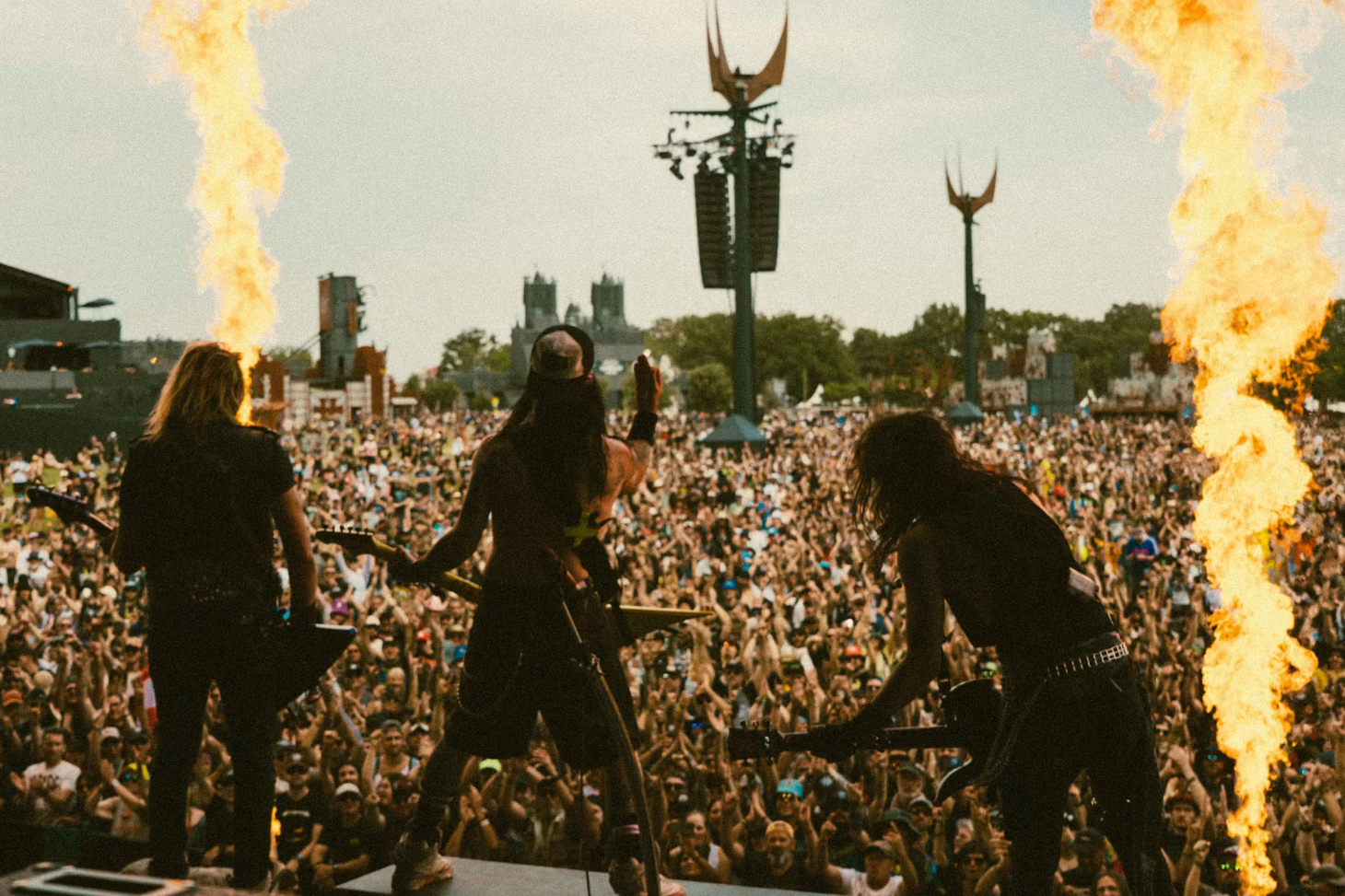
Every year, the sale of passes for the Hellfest extreme music festival resembles a collective ordeal. Thousands of enthusiasts log on simultaneously, follow their progress in a virtual queue, only to discover that the passes are already sold out. For the 2027 edition, 4-day passes became unavailable in less than an hour, before the organizers directed festival-goers to an official, regulated resale site.
At first glance, this electronic waiting list appears to be a simple technical solution for organizing the resale of passes or protecting festival-goers from unofficial platforms. But this interpretation is insufficient: a waiting list does more than simply manage a shortage by excluding those who were denied tickets. These individuals become "subjects to registration."
Hellfest is not an isolated case, however. The widespread adoption of digital queues now affects many high-demand cultural products. While these systems address a common constraint of scarcity, Hellfest presents a unique situation: the waiting list is not simply a mechanism for regulating access, but is also part of a ritualistic process.
A festival that is not just a musical event
Hellfest is not an ordinary festival. In his book Hellfest: a pilgrimage for metalheads , Charbonnier (2017) analyzes the event as an organized, anticipated and ritualized space-time, where metal fans affirm and reaffirm their community belonging.
The word "pilgrimage" obviously doesn't mean that Hellfest is a religion. Rather, it allows us to think of the festival as a deeply imbued space, permeated by signs, codes, paths, thresholds, and symbolic objects. From this perspective, the festival pass takes on a strong symbolic value, becoming a ritualized rite of passage.
However, this transition now begins well before the arrival in Clisson (Loire-Atlantique). As Ruiz et al. (2025) indicate, Hellfest is no longer just a physically delimited space-time: it also has an online presence, giving it a digital boundary.
The festival experience thus begins in front of a screen, during the initial pass sale. For those who didn't get one, this experience continues with the official resale, including registration on the waiting list, the confirmation email, and the hope of a notification.
An online waiting ritual
The phrase "many are called, but few are chosen," borrowed from the Gospel of Matthew, can serve as an analytical metaphor here. Many festival-goers aspire to enter, connect, and register. However, only a few will ultimately have the opportunity to purchase a pass .
We can then speak of a "digital waiting ritual": before entering the festival, one must enter the procedure. Before being admitted, one must wait.
The anticipation of the next edition, which used to really only begin in the spring – the sell-out occurring, before 2015, only in April or May – now tends to ritualize the whole year: the sale of passes , organized from the beginning of July, occurs just a few weeks after the closing of the previous edition which takes place every year in June.
The official page, social media posts, and confirmation email thus form a sequence: first, the sale opens, then it closes and sells out , and finally, the reopening, framed by the hope of the official resale. This third moment is crucial: it transforms frustration into organized patience.
When a failed purchase becomes a preparatory act
Putting yourself on a waiting list is undeniably an act of commitment. The individual provides their address, accepts a rule, enters into an official process, consents to uncertainty, and anxiously checks their emails. In short, they become an active participant in the process, motivated by the prospect of attending the festival.
Let's imagine two festival-goers, both equally motivated. The first obtains their pass during the official sale. The second is unsuccessful, perhaps due to unforeseen circumstances (poor internet connection, technical difficulties, etc.). They then join the waiting list and check the resale system again until a pass becomes available.
Objectively, both have the same pass and the same initial motivations. Yet, their stories are different. Unlike the first festival-goer, the second waited, persevered, and even nearly achieved his goal of gaining access to Hellfest. His commitment is therefore stronger. Indeed, this festival-goer, having obtained tickets through official resale channels, dedicated more time and energy to securing the pass .
This difference in experience is not insignificant. By organizing access to the festival through a waiting process, the system contributes to increasing the subjective value of the pass . The more effort it requires to obtain it, the more likely it is to strengthen attachment to the festival and the desire to repeat the experience in subsequent years.
An opportunity for communication and marketing
Research on engaging digital communication is particularly relevant here. Amato, Bernard, and Boutin (2021) have shown that digital engagement cannot be reduced to platform definitions that include clicks, views, likes , or shares. Engagement must also be considered in terms of the actions performed, their cost, their context of production, and the behaviors they encourage.
The Hellfest waiting list perfectly illustrates this idea. It's not just about clicking a link. It's about entering a process: registering, waiting, accepting a rule, remaining available, possibly receiving a signal, and then acting quickly.
In this vein, Helme-Guizon and Amato (2004) demonstrated that the psychosocial theory of commitment could shed light on the purchasing and loyalty behaviors of internet users. Joining a waiting list thus transforms interest into a trace of interaction. It therefore constitutes a preparatory act for the purchase and, in the context of official resale, a necessary step to hope to obtain a pass.
What digital technology adds lies primarily in how it allows these behaviors to be organized over time. Registering, confirming one's address, checking messages, returning to the website, or quickly responding to a notification constitute a series of micro-actions that maintain the relationship with the festival and, over time, multiply opportunities for action. Digital technology thus acts as an amplifier of engagement mechanisms rather than their origin.
Do not exploit frustration, but channel it
Festival-goers who resorted to reselling tickets, beyond simply acquiring the coveted pass, have thus faced an initial online hurdle. And this waiting period can provoke hostile reactions. The challenge for the organizers is therefore not to exploit this frustration, but to channel it in the face of a paradox: the festival's success generates demand that exceeds its capacity.
Scarcity is therefore less a strategic choice than a structural constraint. The waiting list becomes a regulatory mechanism that maintains contact with festival-goers deprived of immediate passes , transforms disappointment into a future opportunity, and preserves a sense of fairness within the community.

Stéphane Amato , Senior Lecturer in Information and Communication Sciences, University of Toulon ; Corentin Charbonnier , PhD in Anthropology, University of Tours ; University of Orléans and Emilie Ruiz , Professor, Université Grenoble Alpes (UGA)
This article is republished from The Conversation under a Creative Commons license. Read the original article.