
Isabelle Horvath , University of Haute-Alsace (UHA) and Gaëlle Dechamp , Grenoble INP - UGA
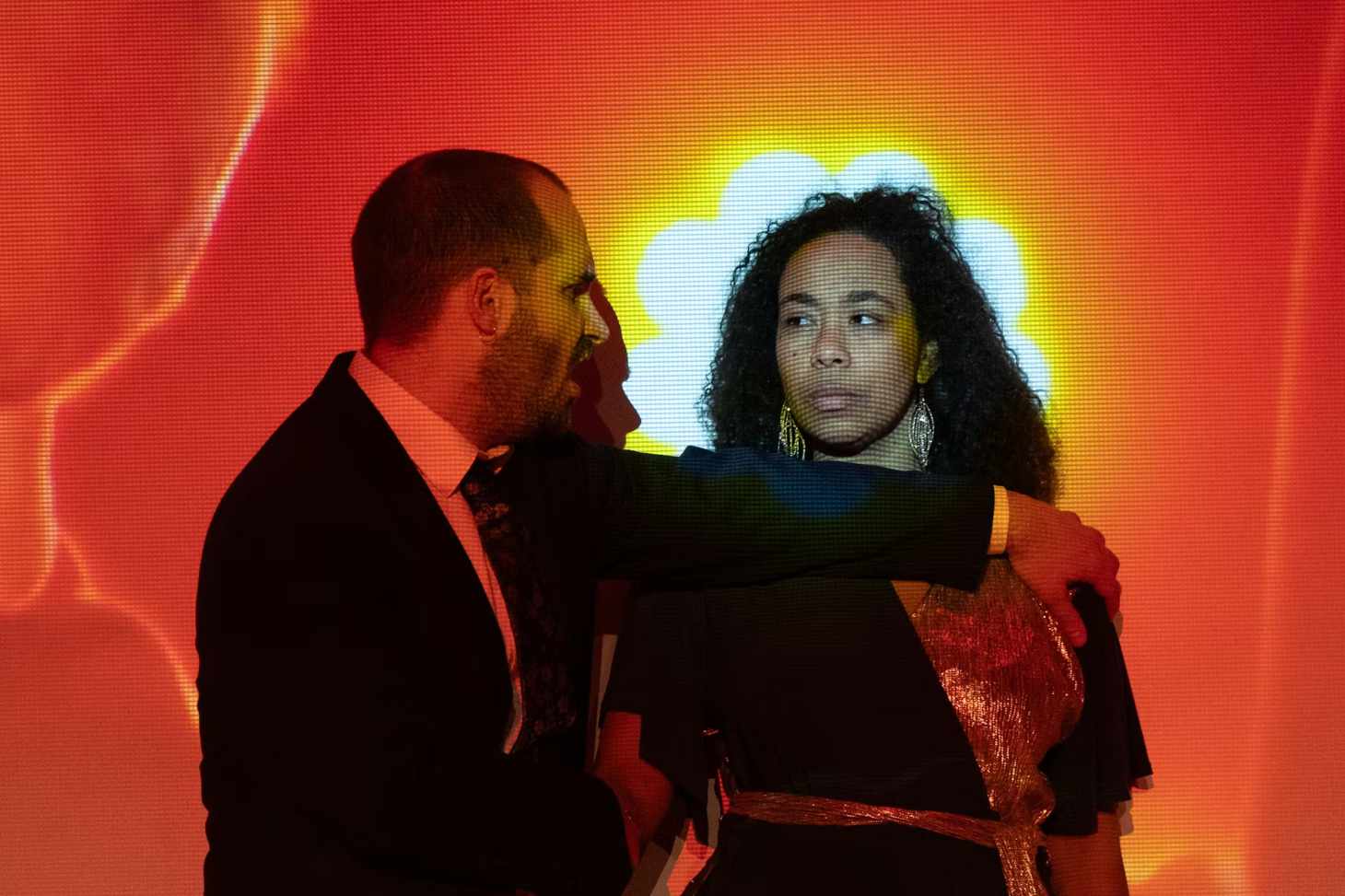
A mother of three, an opera singer, and co-director of an association whose dual activities encompass cultural mediation and the creation of operatic performances, Caroline juggles her various roles and identities on a daily basis. Two researchers in artistic and cultural entrepreneurship conducted a study with her to understand the strategies she implemented, far removed from the traditional model and despite the obstacles encountered, in a context of declining cultural subsidies in France.
Artistic and cultural entrepreneurship brings together the business world and the world of culture. In the professional press, particularly in the performing arts sector, within associations, and in strategic meetings of cultural institutions, it is increasingly discussed as a way to address the challenges of financing, producing, and distributing artistic works. Artistic and cultural entrepreneurship involves developing a structured project in the arts and culture field, reconciling the artistic dimension with the economic one.
It generates both symbolic values, such as the creation and dissemination of aesthetic forms, and economic values because art is produced, sold, and bought, and thus creates jobs and professions, representing a direct economic impact of 2% in France. Creative and cultural entrepreneurship is attracting increasing interest because the decline in subsidies for cultural funding is not simply a temporary setback, but a question that raises the issue of developing new economic models without compromising the status quo. It is more a matter of recognizing that all management and organizational structures should serve the arts and culture, and not the other way around.
The puzzle of women entrepreneurs in culture
This situation is common to all players in the sector. But when you are a woman, especially a mother—also known as a " mompreneur " —transforming tension into momentum becomes a challenge that can sometimes feel like a puzzle. According to the 2023 French Entrepreneurial Index, 28% of women are involved in entrepreneurial activity (business creation project, creation, or takeover) compared to 37% of men . In the arts, entertainment, and recreation sector, 39.6% of sole proprietorships are created by women and 60.4% by men . Women's motivation to become entrepreneurs rests on three factors: the need to provide for their household's basic needs; a career choice that leads to greater self-fulfillment; and work-life balance.
In the case of “mompreneurs,” all three factors come into play; however, seeking a professional role that fulfills a need for self-actualization is the primary motivation. In the arts and culture sector, 32% of these women are freelance workers with an irregular work schedule. Mompreneurs face greater job insecurity than any other type of freelance worker. They are also referred to as “ matermittentes ”; their numbers are not officially tracked. The collective of the same name is working to secure recognition of this unique status.
Beyond material conditions, the unique challenges faced by mother-entrepreneurs in the arts lie in their complex, multi-layered organization, characterized by an interdependence of personal, family, and professional time . How can they successfully navigate the triple challenge of being a woman, an artist, and an entrepreneur?
To overcome this challenge, you have to invent your own tools. That's what Caroline did. We met with her and sought to understand how her entrepreneurial journey unfolded.
How to reconcile everything?
Caroline holds a doctorate in management science, is an opera singer, and co-director of the Brins de Voix association, whose dual activities encompass cultural mediation and the creation of operatic performances. At the time of its founding, Caroline had a one-year-old baby; she would later have two more children. She is a freelance performing artist, meaning she is not a salaried employee.
Our mompreneur faces two challenges that characterize the artistic entrepreneur: reconciling two seemingly incompatible roles —creating and entrepreneurship—and balancing a personal life with a professional life, marked in the performing arts by an atypical rhythm due to irregular hours and absences related to touring. Caroline thus found herself needing to innovate in terms of managerial tools to structure her career path. While not providing a single solution, these tools offer a starting point from which other artist mompreneurs can draw inspiration. We studied this entrepreneurial process using an autoethnographic approach, that is, analyzing the experience as narrated by the author, and drawing on the theory of effectuation .
This theory is well-suited to contexts of uncertainty because it offers an alternative to rational models of entrepreneurship. It prioritizes intuition over causal logic, the process of creating the future over its prediction, and successive transformations over the development of a business model. Thus, it rests on five principles: working with what you have (1); defining acceptable losses (2); prioritizing partnerships (3); being open to surprises (4); and creating your own universe (5).
A path strewn with difficulties
Caroline's entrepreneurial journey is fraught with difficulties that she manages to overcome thanks to her ability to invent management tools and organizational systems that can serve as inspiration for mompreneurs who are performing arts artists.
Physical appearance is often a factor in auditions; women, more so than men, must resemble the image of the role they are auditioning for. Hormonal cycles affect vocal quality; their careers tend to be shorter than men’s due to changes in vocal range. Challenges also stem from childcare, as schedules and travel are ill-suited to family life and even less so to medical emergencies; it is impossible to bring a child backstage without a nanny, and, ultimately, a child without childcare means the singer must be absent—and thus the show must be canceled—which is simply not an option. Fatigue caused by sleep deprivation and pregnancy can affect the artist’s performance. Career interruptions during maternity leave affect the renewal of contracts; artists who are likely to become mothers are sometimes denied contracts because they represent a risk of absence for employers. In this regard, the arts and culture sector is no different from the findings of studies on the link between the risk of motherhood and employment opportunities.
Faced with this crossroads of constraints and in order to chart a dynamic course, Caroline developed the following strategies, which we will consider in light of the principles of effectuation theory: she created her own business (5) to successfully balance her personal and professional life (2) using the resources at her disposal (1), including her knowledge of team management and leadership, and by integrating her personal constraints. She quickly built a network (3), which led to some unexpected encounters (4).
In practical terms, she implemented regular progress meetings with the board members of her association; organized personalized coaching to manage her time and priorities; developed a contract acceptance tool with criteria to justify acceptance or rejection, thus streamlining her workload; and arranged for understudies from the outset of a show's creation to anticipate sick leave, maternity leave, or unplanned absences. Once a week, she discusses organizational constraints and the division of responsibilities with her partner to maintain a healthy work-life balance. Caroline has also developed a support network among parents to find shared childcare solutions and reduce associated costs.
These management systems enabled Caroline to achieve her triple objective: to sing, to manage and to educate, while developing her business.
The ability to undertake projects despite obstacles
Caroline's example, as a woman, mother, entrepreneur and artist, is not an isolated case. Others, like the pianist Pauline Chenais , testify to this interweaving of lives, to the pitfalls against which the unity of personal and professional life is shattered, for example when show organizers are unaccommodating to the artist who takes her child backstage to be able to breastfeed before going on stage.
Caroline, an artist-entrepreneur, has created essential management tools and devices for decision-making, which guide and structure an entrepreneurial approach that can be described as augmented. Indeed, they become instruments for project implementation, "mediators of meaning," and as researchers Sarasvathy and Germain explain:
“You start with the world as it is, simply the small part that is accessible to you in particular, and you effect on it a series of effective transformations that result in the creation of new worlds, imagined, unimagined, and even unimaginable.” (Translated by the authors of the article.)
While the Ministry of Culture has been working since 2017 to combat discrimination based on sex and gender , there are no studies documenting the entrepreneurial journeys of mothers-to-be entrepreneurs . Caroline's case allowed us to delve into a process of developing tools that, while not a model or a recipe, demonstrate an entrepreneurial spirit. It is undoubtedly an inspiring example for other women artists and entrepreneurs.

Isabelle Horvath , Professor of Management Sciences, University of Haute-Alsace (UHA) and Gaëlle Dechamp , Senior Lecturer (HDR) in Management Sciences, Grenoble INP - UGA
This article is republished from The Conversation under a Creative Commons license. Read the original article.